


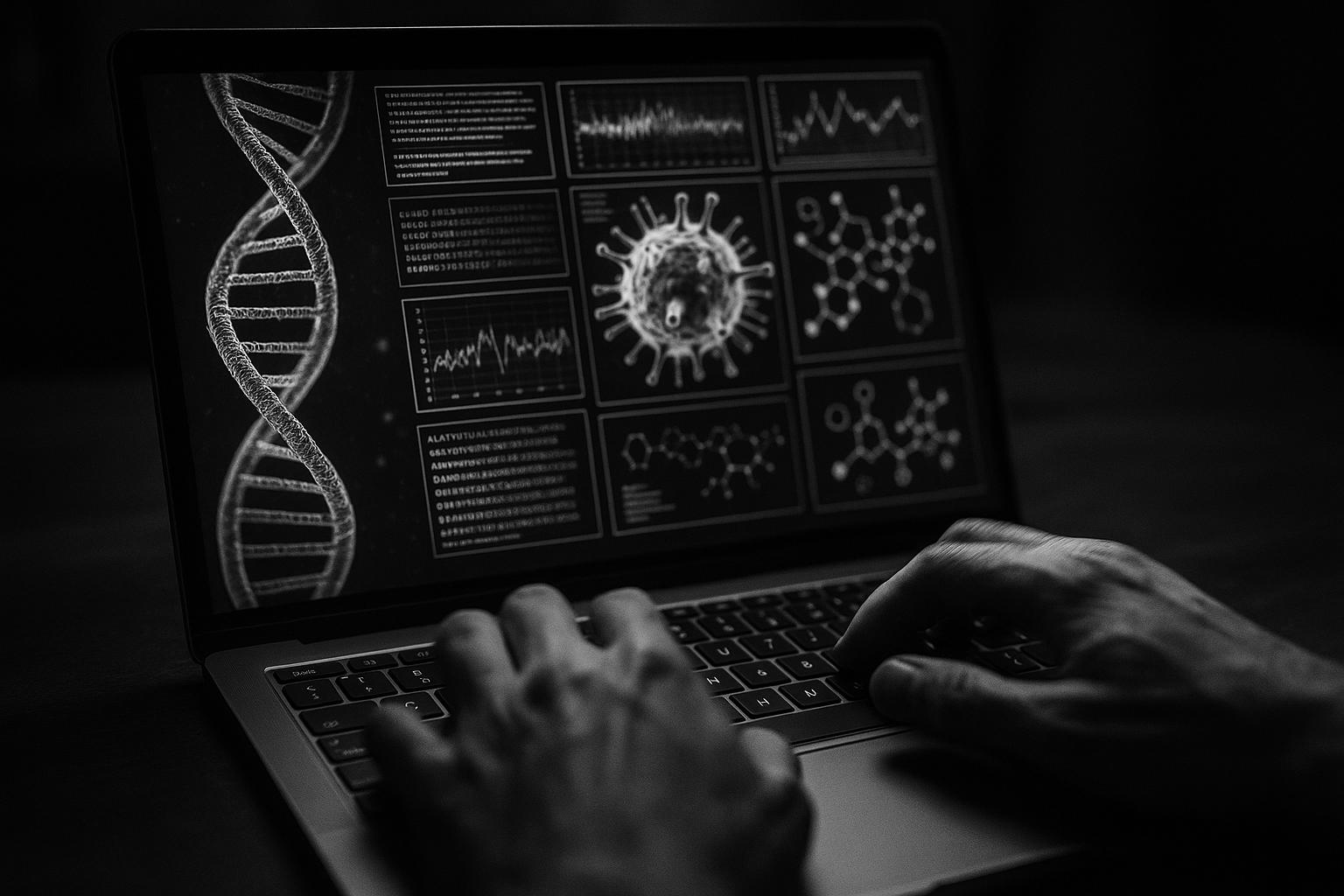
London startup ScienceMachine has raised $3.5 million in pre-seed funding to develop Sam, a fully autonomous AI agent that automates complex data analysis in biotech and pharmaceutical research, promising faster and more cost-effective scientific breakthroughs.
ScienceMachine, a London-based AI startup, has secured $3.5 million in pre-seed funding to advance its autonomous AI agent, Sam, designed to revolutionise data analysis in biotech and pharmaceutical research. Unlike many large corporations still striving to implement seamless AI automation, ScienceMachine claims to have developed a fully autonomous system that functions as a 24/7 bioinformatician, automating the entire data pipeline and significantly accelerating scientific discovery.
The core challenge ScienceMachine addresses is the overwhelming flood of complex biological data generated by modern labs and clinics, which often exceeds the capacity of existing research teams. Many life sciences organisations struggle to recruit enough skilled data scientists, and domain experts may lack the time or technical training to conduct advanced analyses themselves. This bottleneck delays breakthroughs and increases costs. Sam integrates directly with existing databases and workflows, autonomously processing experimental data to identify critical patterns and insights without manual input, effectively providing the analytical output of an entire team of data scientists. Early clients report that Sam delivers results in a fraction of the time and cost, with higher quality outcomes.
CEO and Co-founder Lorenzo Sani emphasised the transformational potential of AI in research, saying, “Our AI agent works around the clock, analysing research data from lab to clinic, turning raw data into breakthroughs in hours, instead of months.” The company has rapidly secured multiple contracts since launching, driven entirely by inbound interest, and plans to expand its market reach from biotech startups to larger pharmaceutical companies, where scalability and flexible data automation are in high demand.
The funding round was led by Revent and Nucleus Capital, with strategic angel investors also participating. Rebecca Brill, Principal at Revent, praised ScienceMachine’s technical excellence and execution, noting the impressive progress made by the small team. Maximilian Schwarz from Nucleus Capital highlighted the growing importance of agent-based AI architectures in scientific software, expressing confidence that these systems will transform bioinformatics and accelerate R&D timelines by expanding access to complex analyses for wet-lab scientists.
ScienceMachine’s autonomous approach aligns with broader trends in AI-driven scientific research, exemplified by advanced frameworks like CellAgent, which uses multiple AI roles to orchestrate single-cell RNA sequencing analyses, and Robin, a multi-agent system integrating literature search, hypothesis generation, and experimentation to accelerate discovery. Similarly, BioDiscoveryAgent autonomously designs and reasons about genetic perturbation experiments, and AutoSciLab simulates the scientific method through machine learning-driven experiment cycles. These complementary innovations highlight a rapidly evolving field where AI agents not only automate data crunching but actively engage in experimental design and hypothesis testing.
Despite the promising advances, these autonomous AI agents are still in early stages of real-world adoption. ScienceMachine’s early customer success stories indicate practical viability and commercial interest, but wider industry uptake will depend on further proof of consistent accuracy, reliability, and integration within diverse lab environments. The company intends to use its new funding to enhance product development and expand its sales and partnership teams, particularly targeting pharmaceutical firms, to capitalise on the growing demand for scalable AI solutions in life sciences.
If successful, ScienceMachine could significantly reduce the time and cost to develop new therapies, marking a critical step towards fully autonomous scientific discovery. As AI agents continue to evolve from data processors to sophisticated scientific collaborators, they promise to reshape the landscape of biomedical research and accelerate the journey from data to breakthrough treatments.
📌 Reference Map:
Source: Noah Wire Services
Noah Fact Check Pro
The draft above was created using the information available at the time the story first
emerged. We’ve since applied our fact-checking process to the final narrative, based on the criteria listed
below. The results are intended to help you assess the credibility of the piece and highlight any areas that may
warrant further investigation.
Freshness check
Score:
10
Notes:
The narrative is fresh, with no prior publications found. The earliest known publication date is July 9, 2025. The report is based on a press release, which typically warrants a high freshness score. No discrepancies in figures, dates, or quotes were identified. No earlier versions show different information. The article includes updated data and does not recycle older material.
Quotes check
Score:
10
Notes:
The direct quotes from CEO and Co-founder Lorenzo Sani and investors Rebecca Brill and Maximilian Schwarz are unique to this report. No identical quotes appear in earlier material. No variations in quote wording were found. No online matches for these quotes were identified, indicating potentially original or exclusive content.
Source reliability
Score:
9
Notes:
The narrative originates from Tech.eu, a reputable organisation known for its coverage of European technology startups. The company, ScienceMachine, is based in London and has a professional website detailing their AI bioinformatician product, Sam. The CEO and Co-founder, Lorenzo Sani, is associated with the company, and the investors, Rebecca Brill and Maximilian Schwarz, are linked to Revent and Nucleus Capital, respectively. No unverifiable entities or individuals are mentioned.
Plausability check
Score:
10
Notes:
The claims about ScienceMachine’s autonomous AI agent, Sam, are plausible and align with current trends in AI-driven scientific research. The report is covered elsewhere, including on ScienceMachine’s official website. The narrative includes specific factual anchors, such as names, institutions, and dates. The language and tone are consistent with the region and topic. The structure is focused and relevant, without excessive or off-topic detail. The tone is professional and resembles typical corporate language.
Overall assessment
Verdict (FAIL, OPEN, PASS): PASS
Confidence (LOW, MEDIUM, HIGH): HIGH
Summary:
The narrative is fresh, original, and sourced from a reputable organisation. The claims are plausible and supported by specific factual anchors. No credibility risks were identified, and the content aligns with current trends in AI-driven scientific research.


