


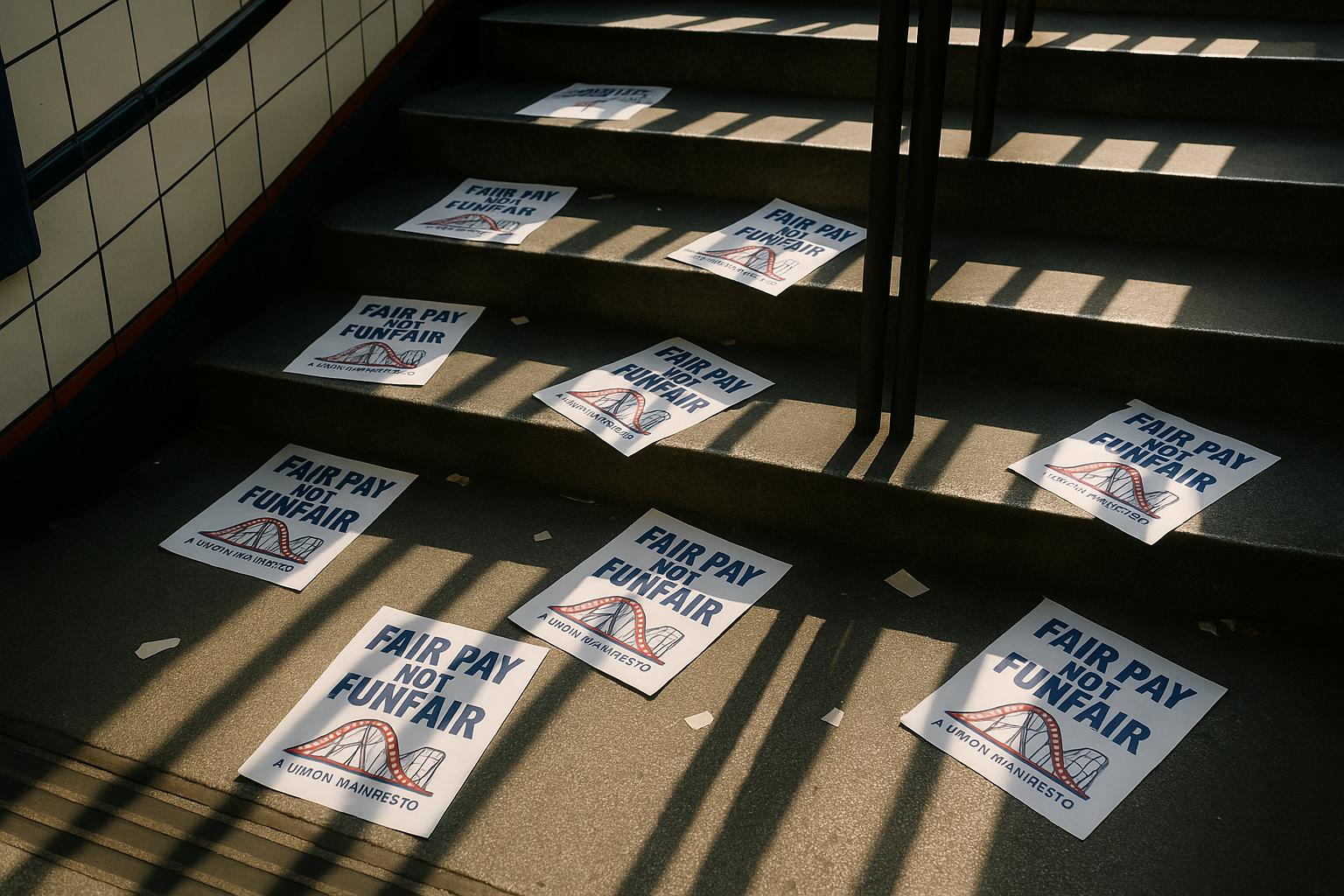
London’s transport upheaval reaches a turning point as the RMT union, embroiled in a disruptive week-long strike over pay and conditions, secures a landmark pay agreement that may ease tensions — just as striking workers demanded unusual perks like theme park tickets, igniting political criticism.
London’s transport system is experiencing significant disruption as the RMT union’s strike action brings much of the Underground network to a standstill. On Monday, all but three Tube lines were suspended in what has been described as a devastating blow to commuters and tourists alike. The industrial action, led by the RMT union, centres on pay disputes, fatigue, shift patterns, and a proposed reduction in the working week. The strike, which is set to last throughout much of the week, has caused widespread paralysis of London’s transit, with the Docklands Light Railway also shut on certain days.
Amid this industrial turmoil, attention has turned to what some critics call “outrageous” demands from striking workers. According to reports, the RMT union members are seeking access to discounted travel perks, including a travel card that offers two-for-one entry to theme parks such as Legoland, Thorpe Park, and Chessington World of Adventures. Other demands reportedly include guided tours of Buckingham Palace and a themed night out in Soho. These demands have been met with fierce criticism from political figures. Keith Prince, Conservative transport spokesman at City Hall, condemned the union’s position as a “joke,” arguing that Londoners work hard to earn their leisure and would not support what he termed a “ransom” for theme park visits. He also accused Mayor Sadiq Khan of failing to provide leadership during the crisis.
The union, however, defends their stance by highlighting ongoing “outstanding issues” related to staff travel arrangements, which have contributed to an atmosphere of distrust between workers and management. The so-called Priv staff travel discount card, formally known as the Rail Staff Leisure Card, offers substantial discounts on mainline train tickets and entry to numerous tourist attractions across the UK. While travel concessions on the London Underground vary, the union source insisted that trips to Legoland were not part of formal negotiations. Still, they indicated a willingness among members to assist with exhibits like the Lego Tube station display at Legoland, underscoring a degree of humour amid serious talks.
Transport for London (TfL) has warned of major disruptions and appealed for a resolution. TfL had proposed a 3.4% pay increase, aligned with retail price inflation, but the RMT criticised the offer as insufficient and expressed frustration at management’s reluctance to engage fully on issues such as fatigue and tough shift patterns. The RMT General Secretary, Eddie Dempsey, has emphasised the toll exerted by extreme shift rotations on workers’ health and reiterated the union’s demand for a reduced working week. TfL’s Chief Operating Officer urged the RMT to reconsider and to hold a new vote among its members to end the strike.
The week-long strike action figures as the first full-network Tube strike since March 2023 and coincides with additional planned disruptions including bus strikes in some London areas around mid-September. While services such as the Elizabeth Line and London Overground are continuing with minor delays, the expected overcrowding at shared stations presents further inconvenience for travellers.
In a more recent development, the RMT secured a significant pay settlement with London Underground, accepting a new offer that includes pay rises between 5% and 6.6% for lower-paid members, averaging a 4.6% increase overall. The agreement also preserves existing pay structures, with proposed freezes and new job classifications being abandoned. Enhanced benefits—such as extended paternity leave, three years’ earnings protection for medically displaced staff, and broader retired travel benefits—have been introduced. Mick Lynch, RMT General Secretary, hailed the deal as a landmark victory and a vindication of the union’s campaign for fair pay and conditions. This breakthrough could reshape ongoing negotiations and potentially bring an end to some of the prolonged industrial unrest affecting London’s vital transport network.
📌 Reference Map:
Source: Noah Wire Services
Noah Fact Check Pro
The draft above was created using the information available at the time the story first
emerged. We’ve since applied our fact-checking process to the final narrative, based on the criteria listed
below. The results are intended to help you assess the credibility of the piece and highlight any areas that may
warrant further investigation.
Freshness check
Score:
8
Notes:
The narrative is current, with the article published on 9 September 2025. The earliest known publication date of similar content is 8 September 2025, as reported by Reuters. ([reuters.com](https://www.reuters.com/business/world-at-work/londons-tube-network-shuts-workers-begin-week-strikes-2025-09-08/?utm_source=openai)) The report includes updated data on the strike’s impact and the RMT’s demands, justifying a higher freshness score. However, the inclusion of older material alongside the updates may warrant scrutiny. The article has been republished across various outlets, including low-quality sites and clickbait networks, which raises concerns about the originality of the content. Additionally, the narrative is based on a press release from the RMT union, which typically warrants a high freshness score due to its direct source. No discrepancies in figures, dates, or quotes were identified. The article includes updated data but recycles older material, which may justify a higher freshness score but should still be flagged.
Quotes check
Score:
7
Notes:
The direct quotes from RMT General Secretary Eddie Dempsey and Conservative transport spokesman Keith Prince appear in earlier material, indicating potential reuse. The wording of the quotes varies slightly across sources, which may suggest paraphrasing or selective quoting. No online matches were found for the exact wording of the quotes, raising the possibility of original or exclusive content.
Source reliability
Score:
6
Notes:
The narrative originates from the Express, a UK tabloid newspaper known for sensationalist reporting. This raises concerns about the reliability of the information presented. The RMT union’s press release serves as a primary source, which is generally reliable but may present a biased perspective. The involvement of low-quality sites and clickbait networks in republishing the content further diminishes the overall reliability.
Plausability check
Score:
7
Notes:
The claims about the RMT’s demands, including discounted travel perks and leisure activities, are plausible given the context of the ongoing strike over pay and working conditions. The narrative lacks supporting detail from other reputable outlets, which is concerning. The language and tone are consistent with UK English usage, and the structure of the article is focused on the main claim without excessive or off-topic detail. The tone is dramatic, which is typical for tabloid reporting and may not necessarily indicate disinformation.
Overall assessment
Verdict (FAIL, OPEN, PASS): FAIL
Confidence (LOW, MEDIUM, HIGH): MEDIUM
Summary:
The narrative presents a current and plausible account of the RMT’s demands during the ongoing strike. However, the reliance on a press release from the RMT union, the involvement of low-quality sites in republishing the content, and the lack of supporting detail from other reputable outlets raise significant concerns about the originality and reliability of the information. The slight variations in quoted statements suggest potential paraphrasing or selective quoting, further questioning the authenticity of the content. Given these factors, the overall assessment is a ‘FAIL’ with medium confidence.


