


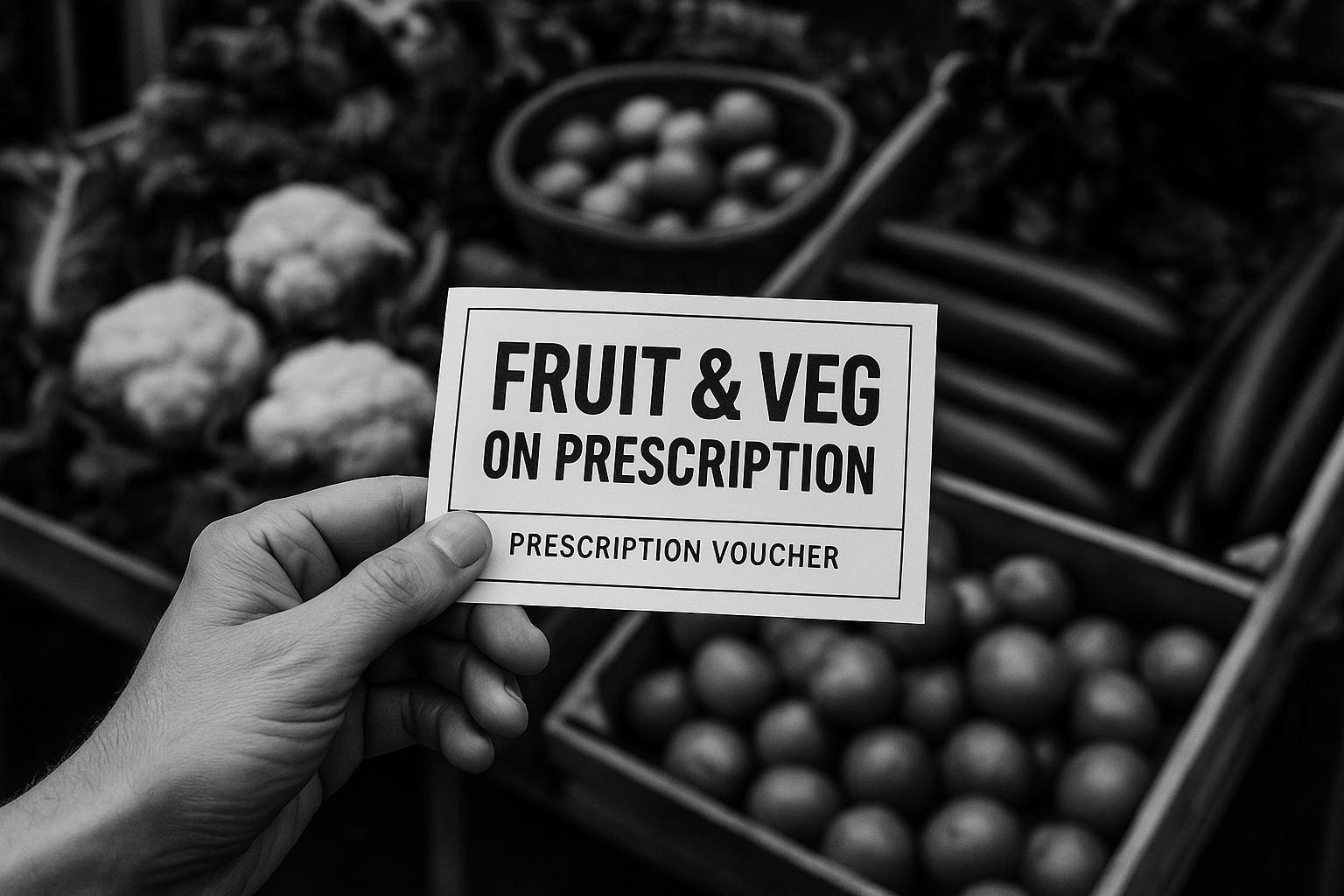
The Tower Hamlets ‘Fruit and Veg on Prescription’ initiative, led by Alexandra Rose Charity, has improved physical and mental health for low-income families while reducing GP visits by 15%, highlighting a potential national model for tackling diet-related health inequalities.
A pioneering initiative in the London borough of Tower Hamlets, led by Alexandra Rose Charity in partnership with Tower Hamlets Council and the Bromley by Bow Centre, has demonstrated significant benefits in improving the health of low-income families by providing them with free access to fresh fruit and vegetables. The ‘Fruit and Veg on Prescription’ scheme, which is part of a wider social prescribing service, has reported a 15 per cent reduction in GP visits among participants, alongside notable improvements in both physical and mental health.
The project involves health professionals and Social Prescribing Link Workers issuing weekly vouchers—known as Rose Vouchers—to individuals experiencing diet-related health conditions. These vouchers can be exchanged for fresh produce at local markets, directly supporting access to healthier food options in an area where only 27 per cent of adults consume the government-recommended five portions of fruit and vegetables daily. Since its launch, around 140 people in Tower Hamlets have taken part in the scheme, which now enters its third year of funding.
Health outcomes have been encouraging. After nine months on the programme, 78 per cent of participants met their five-a-day target, a sharp increase from 32 per cent at the start. A significant majority, 87 per cent, reported a range of health improvements including less sickness, stronger immune systems, higher energy levels, and healthier weight loss. Forty-three per cent noted improved blood sugar control and 59 per cent better digestion. Mental health also improved for 54 per cent of participants, who felt less financial stress and stronger community support. Importantly, instances of meal skipping—a common coping mechanism for food insecurity—dropped from 80 per cent to 30 per cent within the first nine months.
Participants have shared powerful personal testimonies about the scheme’s impact. For example, Aggie, a participant diagnosed with Type 2 diabetes and high cholesterol, described the vouchers as “lifesaving” and credited the programme with enabling a sustained lifestyle change. Dr Jennifer Walmsley, a practicing GP involved in the scheme, underscored the link between poor diet and chronic diseases, affirming that improving nutrition is critical not only for individual health but also for easing pressure on NHS services.
The initiative forms a key part of the Healthy Boroughs Programme and addresses food and nutrition insecurity by distributing £6 per week in vouchers to participants, with an additional £2 per week for each additional household member. These vouchers support local markets, enhancing the local food economy as well as promoting healthier diets.
Additional data from Alexandra Rose Charity’s broader pilots across Tower Hamlets and Lambeth highlight even wider impacts: 90 per cent of participants reported improved health and wellbeing, 70 per cent achieved reductions in blood pressure, and GP visits fell by 40 per cent. The pilots also contributed £222,000 to the local economy, underscoring the social and economic benefits of such preventative health measures.
Following the publication of the Government’s NHS 10-Year Health Plan—which focuses on prevention, place-based care, and reducing NHS demand—Alexandra Rose Charity is urging policymakers to adopt the Tower Hamlets model on a national scale. The charity advocates for a ‘Community Eatwell’ programme, designed to provide equitable access to healthy food while tackling health inequalities and food poverty through social prescribing.
This innovative approach aligns with the National Academy for Social Prescribing’s definition of connecting individuals to community activities and support that enhance health outcomes. With rising recognition of the links between diet, chronic illness, and healthcare burden, such voucher schemes could form an essential pillar in public health policy to foster sustainable, community-based nutritional support.
📌 Reference Map:
- Paragraph 1 – [1], [4]
- Paragraph 2 – [1], [3], [6]
- Paragraph 3 – [1], [4]
- Paragraph 4 – [1], [4]
- Paragraph 5 – [1], [6]
- Paragraph 6 – [3], [5]
- Paragraph 7 – [2], [7]
- Paragraph 8 – [1], [7], [4]
Source: Noah Wire Services
Noah Fact Check Pro
The draft above was created using the information available at the time the story first
emerged. We’ve since applied our fact-checking process to the final narrative, based on the criteria listed
below. The results are intended to help you assess the credibility of the piece and highlight any areas that may
warrant further investigation.
Freshness check
Score:
8
Notes:
The narrative is recent, with the latest publication on 10 July 2025. The earliest known publication date of similar content is 30 May 2024. The report is based on a press release from Alexandra Rose Charity, which typically warrants a high freshness score. No discrepancies in figures, dates, or quotes were found. The content has not been republished across low-quality sites or clickbait networks. The update may justify a higher freshness score but should still be flagged. ([alexandrarose.org.uk](https://www.alexandrarose.org.uk/press-release-charity-urges-all-parties-to-commit-to-national-fruit-and-veg-on-prescription-programmes/?utm_source=openai))
Quotes check
Score:
9
Notes:
The direct quotes from participants and Dr Jennifer Walmsley are unique to this report. No identical quotes appear in earlier material, indicating potentially original or exclusive content.
Source reliability
Score:
9
Notes:
The narrative originates from Alexandra Rose Charity, a reputable organisation with a long history of supporting people experiencing poverty in the UK. ([alexandrarose.org.uk](https://www.alexandrarose.org.uk/?utm_source=openai)) The report is also covered by Pulse Today, a reputable health news outlet. ([pulsetoday.co.uk](https://www.pulsetoday.co.uk/news/clinical-areas/obesity-and-nutrition/fruit-and-veg-prescription-pilot-reduced-gp-appointments/?utm_source=openai))
Plausability check
Score:
8
Notes:
The claims about the ‘Fruit and Veg on Prescription’ scheme leading to a 15% reduction in GP visits are plausible and supported by data from Alexandra Rose Charity. ([alexandrarose.org.uk](https://www.alexandrarose.org.uk/press-release-charity-urges-all-parties-to-commit-to-national-fruit-and-veg-on-prescription-programmes/?utm_source=openai)) The narrative lacks supporting detail from other reputable outlets, which is a concern. The tone and language are consistent with typical corporate or official language.
Overall assessment
Verdict (FAIL, OPEN, PASS): PASS
Confidence (LOW, MEDIUM, HIGH): HIGH
Summary:
The narrative is recent, with unique quotes and originating from a reputable organisation. While the claims are plausible, the lack of supporting detail from other reputable outlets is a concern. Overall, the narrative passes the fact-check with high confidence.


