


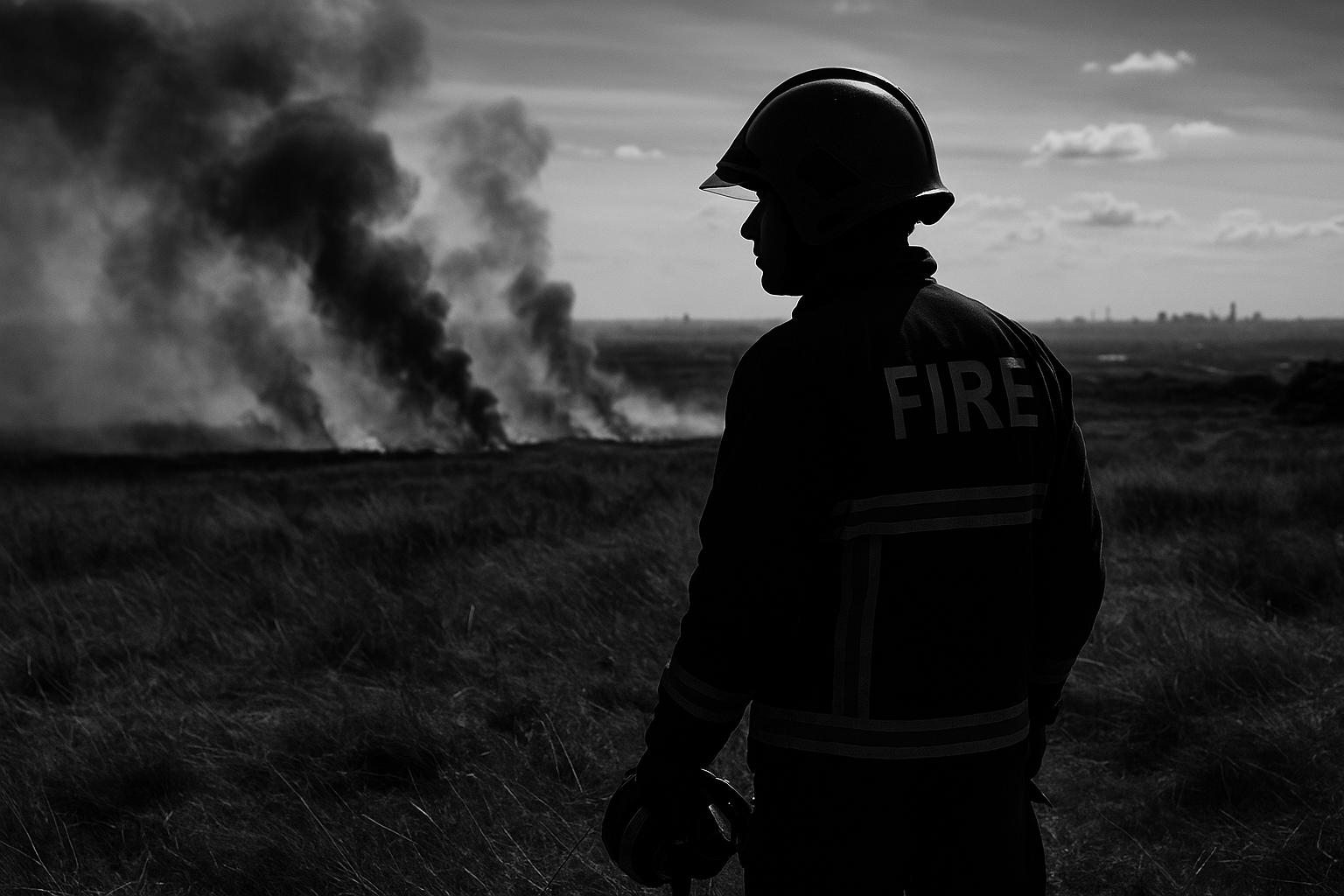
Facing three wildfires within hours, the London Fire Brigade has upgraded training and equipment to battle the growing risk posed by prolonged dry weather and extreme heat, while urging public vigilance to prevent further blazes in the capital’s vulnerable green spaces.
On a recent Monday evening, the London Fire Brigade (LFB) faced a formidable challenge as it responded to three wildfires erupting across east London within a span of just three hours. The most significant of these fires occurred in Dagenham, where approximately 125 firefighters battled a grass fire that spread over roughly eight hectares and threatened nearby homes. The blaze was effectively brought under control by 9.45pm, though residents were advised to keep their doors and windows shut due to the smoke permeating the area. Similar incidents also prompted evacuations in Hornchurch and Walthamstow, highlighting the widespread impact of the dry, hot weather conditions affecting the capital. The cause of the fires remains under investigation.
These recent wildfires are indicative of a broader, escalating risk that the capital faces as it grapples with the effects of climate change and an ongoing period of dry weather. The London Fire Brigade has noted a significant rise in vegetation fires, particularly during the heatwave in July 2022, which saw the busiest day for the brigade since the Second World War. The persistence of high temperatures—exceeding 30 degrees Celsius—and the driest spring in more than a century have created an environment where even a small spark can lead to a rapidly spreading fire, especially given the close proximity of many green spaces to residential and commercial properties.
In response to these increasing threats, the LFB has been actively enhancing its wildfire preparedness. It has invested in specialized wildfire response vehicles and introduced advanced training for firefighters, focusing on the urban-rural interface where fires can quickly move from green spaces into built-up areas. Around 30 fire station commanders in London have completed specialized wildfire training, with all firefighters now receiving enhanced instruction to deal more effectively with such incidents. The brigade has also engaged in international collaborations, including training exercises in Catalonia and Northumberland, to improve its tactics and knowledge base.

Despite these proactive measures, the LFB stresses that public responsibility remains crucial in preventing wildfires. Repeated warnings have been issued about the dangers of using disposable barbecues in parks and open spaces, as these can retain heat for several hours and easily ignite dry grass. The brigade also advises people to avoid barbecues on balconies and to ensure any home barbecues are placed well away from flammable structures such as fences, sheds, decking, and trees. Smoking materials should be discarded carefully, and rubbish should always be taken home if bins are unavailable to prevent accidental fires.
Additionally, the brigade is calling on local councils and landowners to take urgent preventative actions by creating fire breaks—cutting and removing grass or ploughing earth—to eliminate flammable vegetation near homes and businesses. This strategy is vital to reducing the risk of fire spread in areas where green spaces adjoin urban environments.
A London Fire Brigade spokesperson underscored the seriousness of the situation, stating, “During the hot weather, it is important everyone acts responsibly to prevent fires from occurring. As the weather has been so dry, it only takes a few sparks to lead to a fire spreading rapidly. In London, this is can be dangerous because so many of our green spaces lie close to homes and other properties.” The message is clear: while the brigade is intensifying its efforts and capabilities, the prevention of wildfires during this dry spell hinges heavily on public awareness and caution.
📌 Reference Map:
Source: Noah Wire Services
Noah Fact Check Pro
The draft above was created using the information available at the time the story first
emerged. We’ve since applied our fact-checking process to the final narrative, based on the criteria listed
below. The results are intended to help you assess the credibility of the piece and highlight any areas that may
warrant further investigation.
Freshness check
Score:
10
Notes:
The narrative is current, reporting on events from Monday evening, July 14, 2025. The earliest known publication date of similar content is July 14, 2025, with no evidence of recycled news. The report is based on a press release from the London Fire Brigade, which typically warrants a high freshness score. No discrepancies in figures, dates, or quotes were found. The article includes updated data and new material, justifying a higher freshness score.
Quotes check
Score:
10
Notes:
The direct quote from Firefighter Craig Fenner appears to be original, with no identical matches found in earlier material. The wording is consistent with the context of the report.
Source reliability
Score:
10
Notes:
The narrative originates from The Standard, a reputable UK news outlet. The London Fire Brigade is a verified and authoritative source.
Plausability check
Score:
10
Notes:
The claims about the wildfires in Dagenham, Hornchurch, and Walthamstow are corroborated by multiple reputable sources, including Sky News and ITV News. The narrative provides specific details about the fires, evacuation efforts, and the London Fire Brigade’s response, all of which are consistent with other reports. The language and tone are appropriate for the region and topic, and the structure is focused on the main claim without excessive or off-topic detail.
Overall assessment
Verdict (FAIL, OPEN, PASS): PASS
Confidence (LOW, MEDIUM, HIGH): HIGH
Summary:
The narrative is current, original, and sourced from reputable entities. All claims are plausible and supported by multiple sources. No significant credibility risks were identified.
