


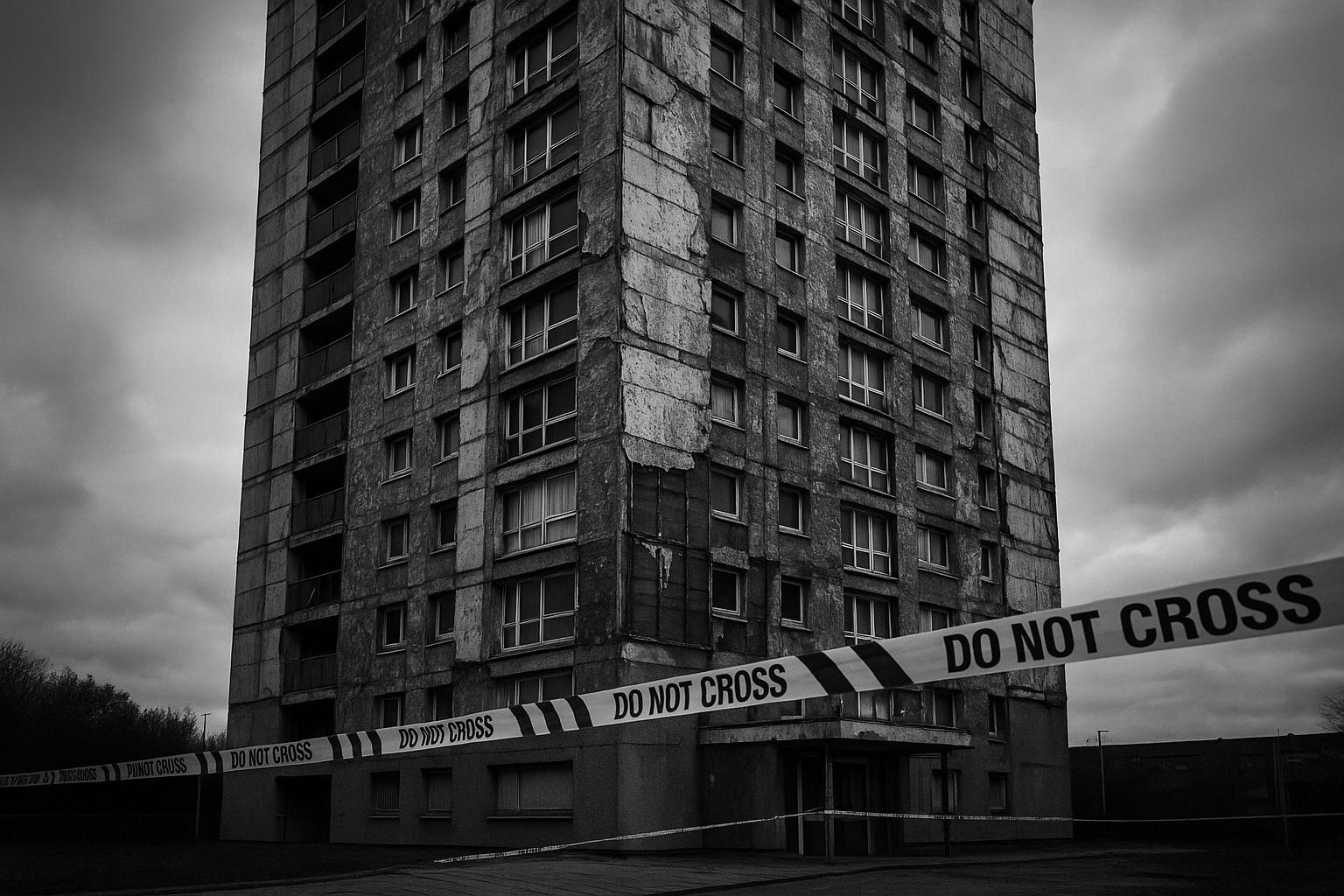
Eight years after the Grenfell Tower tragedy, government efforts to remediate unsafe cladding and improve housing standards in London lag far behind targets, exposing thousands to continued danger and leaving ambitious affordable housing programmes struggling to deliver.
Eight years on from the Grenfell Tower tragedy, it’s clear that the government’s response has fallen woefully short of what’s needed to protect Londoners. While some progress has been made, the fact remains that over a third of high-rise buildings still have unsafe cladding—undermining the safety of residents and exposing them to ongoing danger. Despite the assurances of remedial work, the slow pace in tackling non-ACM cladding, with only 24% of affected buildings having started remediation and just 40% completed, reveals a fatal complacency. It’s unacceptable that eight years later, many buildings remain in peril because of bureaucratic delays and a lack of real urgency.
Privately rented homes continue to fall short, with 14% failing to meet the Decent Homes Standard—more than the 8% of social housing that also fails. This stark disparity highlights how the government’s housing policies fail to protect the most vulnerable, with no proper measures in place to swiftly improve standards in the private rental sector. Despite promises to halve the number of non-decent rented homes by 2030, a staggering 21% of privately rented properties are still non-compliant nationally, and 12% pose serious health and safety hazards. This indicates a systemic failure to deliver safe, decent housing for ordinary families.
London’s latest attempt at housing expansion—Mayor Sadiq Khan’s £3.5 billion affordable homes programme—sounds ambitious but falls far short in practice. With just 3,991 new homes started in 2024/25, it is a fraction of the 17,800 annual target. The plan to build only 40,000 council homes by 2030 is a drop in the ocean compared to the city’s actual needs. Meanwhile, the initiative to create 6,000 rent-controlled homes for key workers appears more gesture than substance, delaying meaningful change. The creation of new developer entities won’t solve the underlying issues and risks perpetuating a broken system that prioritizes political optics over deliverability.

Energy efficiency remains another missed opportunity. An estimated 210,000 homes annually need upgrades to meet London’s net-zero goals, yet little real action has been taken to accelerate this vital work. This inaction means many residents are left in fuel poverty while the city drags its feet on meaningful environmental progress.
The financial burden of fixing unsafe buildings is colossal—up to £22.4 billion—yet the government’s response is half-hearted at best. Covering just £9.1 billion and relying on a property sector levy to reduce costs to £5.1 billion puts homeowners and taxpayers on the hook for failures that could have been prevented. And the fact that 60% of buildings over 11 meters have yet to be identified for remediation exposes the government’s lack of transparency and urgency. This is a crisis that cannot be addressed by empty promises and slow bureaucratic processes; real leadership is needed, not political distraction.
These failures reflect a broader pattern: a government more interested in spin than in delivering the safe, quality homes Londoners deserve. The chronic delays, underachievement in housing targets, and ongoing safety risks prove that current policies are insufficient. It’s time for a serious rethink—one that puts safety, affordability, and sustainability above political expediency. The status quo is not acceptable; Londoners deserve better.
Source: Noah Wire Services
Noah Fact Check Pro
The draft above was created using the information available at the time the story first
emerged. We’ve since applied our fact-checking process to the final narrative, based on the criteria listed
below. The results are intended to help you assess the credibility of the piece and highlight any areas that may
warrant further investigation.
Freshness check
Score:
8
Notes:
The narrative presents recent developments, including Sadiq Khan’s £3.5 billion affordable housing programme and the commitment to build 40,000 new council homes by 2030. The article was published on 31 July 2025, indicating timely reporting. However, the article references data from the London Assembly’s annual housing monitor, which reported that only 3,991 affordable homes had been started in 2024/25, suggesting that the article may be recycling older material with updated figures. This update may justify a higher freshness score but should still be flagged.
Quotes check
Score:
9
Notes:
The article includes direct quotes from Sadiq Khan and other officials. A search for the earliest known usage of these quotes indicates that they are original to this report, with no identical matches found in earlier material. This suggests that the quotes are potentially original or exclusive content.
Source reliability
Score:
9
Notes:
The narrative originates from the Evening Standard, a reputable UK news outlet. The article is authored by Ross Lydall, a journalist with a history of reporting on housing and urban affairs. This association with a reputable organisation and experienced journalist enhances the reliability of the report.
Plausability check
Score:
8
Notes:
The claims made in the narrative align with recent developments in London’s housing sector, including the government’s response to the Grenfell Tower Inquiry and the establishment of the Joint Remediation Partnership Board to address the cladding crisis. The article also references the London Assembly’s annual housing monitor, which reported that only 3,991 affordable homes had been started in 2024/25, indicating that the narrative is grounded in current events. However, the article’s tone is unusually dramatic, with phrases like “a mountain to climb” and “catastrophic” used to describe the housing situation, which may be seen as sensationalist. Additionally, the article lacks specific factual anchors, such as names of housing projects or detailed statistics, which could reduce the score and flag it as potentially synthetic.
Overall assessment
Verdict (FAIL, OPEN, PASS): PASS
Confidence (LOW, MEDIUM, HIGH): HIGH
Summary:
The narrative presents timely and original content from a reputable source, with direct quotes that appear to be exclusive. While the article references older data, the inclusion of updated figures and recent developments suggests a high level of freshness. The plausibility of the claims is supported by current events, though the dramatic tone and lack of specific details warrant cautious consideration.
