


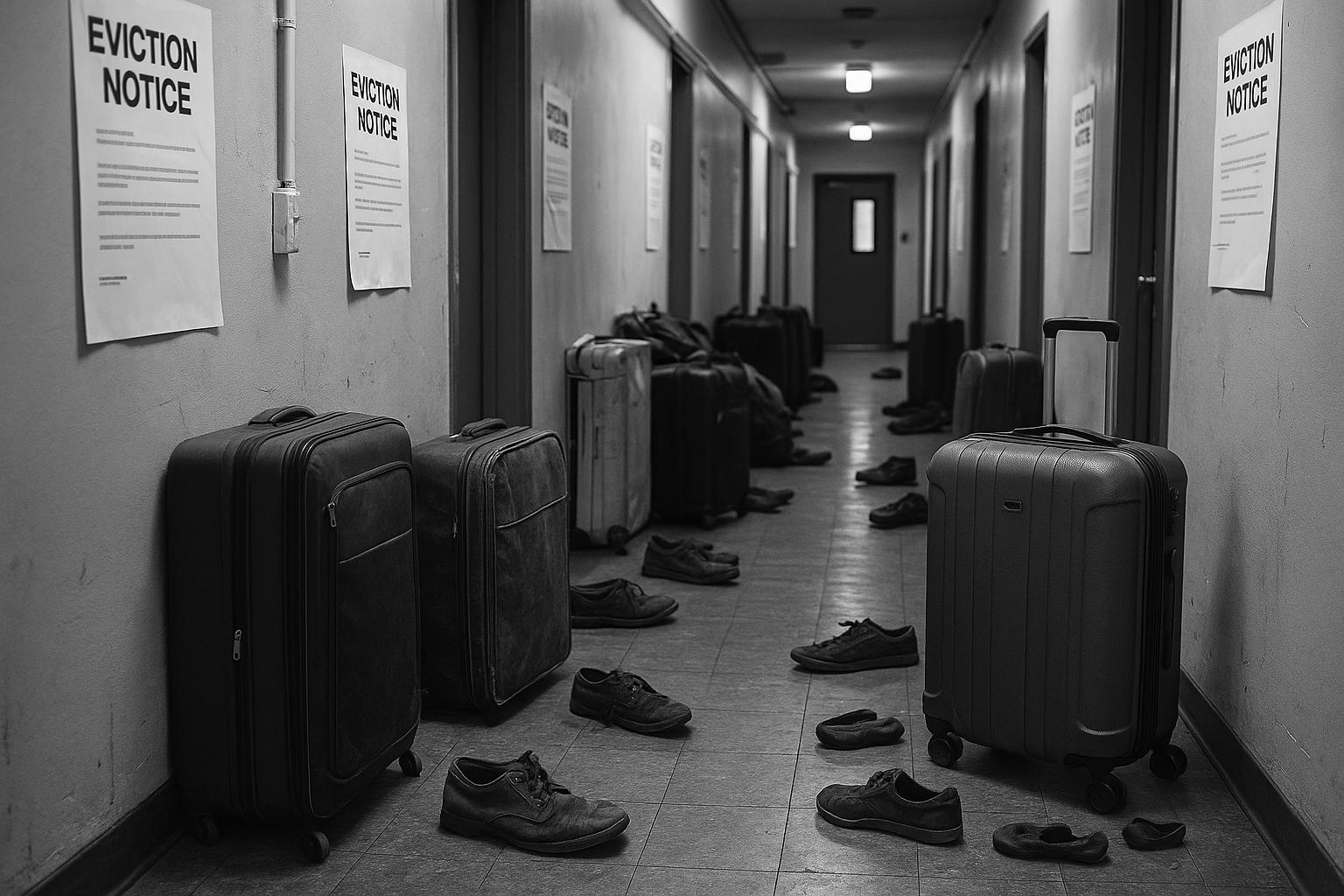
London faces an escalating student housing crisis as bureaucratic delays, costly safety regulations, and misguided government policies block the delivery of purpose-built student accommodation, pushing thousands into an unaffordable private rental market and deepening social inequality.
London’s student housing crisis has spiraled into a full-blown disaster, exposing the utter failure of government policies to address the needs of hardworking students. The so-called ‘shortage’ of purpose-built student accommodation (PBSA) is not accidental—it’s a direct consequence of bureaucratic red tape, overregulation, and a government that has prioritized political correctness over practical solutions for the real housing shortage. Despite forecasts that a million students will seek education in London over the next five years, the city’s meager PBSA stock—just over 100,000 beds for 400,000 students—barely scratches the surface. This shortage is forcing students into the chaotic and increasingly unaffordable private rental market, further inflaming London’s housing crisis and adding yet another burden on the strained local councils, some of which have been forced to put homeless families into hotels, an appalling sign of governmental neglect.
The so-called ‘improvements’ in building safety—introduced in 2022—have been anything but. Instead of protecting residents, these regulations have clogged the pipeline for new PBSA developments for over a year, with delays reaching beyond the typical construction timelines, thanks to overly cautious and bureaucratic safety checks. Major providers like Unite Students are reporting delays averaging six months, but many projects remain stalled entirely. This regulatory paralysis means critical student accommodation simply isn’t being built on time, pushing thousands of students into the already overcrowded private sector and dangerously driving up rents. Meanwhile, recent legislation such as the Renters’ Rights Bill threatens to push landlords out of the market completely, leaving even fewer options for students and increasing the risk of profiteering by unscrupulous landlords looking to exploit the crisis.
Rental affordability for students is crumbling under the weight of misguided policy, with rents soaring by 18% over just two years—outpacing student maintenance loans and creating insurmountable barriers for those from lower-income backgrounds. The government’s failure to support students financially, while simultaneously erecting regulatory barriers for accommodation providers, is a clear sign of a government out of touch with the practical realities facing the next generation. It’s no coincidence that social mobility is stalling, and inequality is widening, when government policies serve to make access to higher education an impossible dream for many.

Despite the chaos, the private student housing market continues to attract investment—highlighting that the opportunity to profit from London’s student accommodation shortage is still lucrative for big developers. Reports show record-breaking investments, with companies willing to pour hundreds of millions into projects that can barely keep up with rising construction costs. Yet, these developments remain out of reach for most students, limited to the highest-demand urban areas, further deepening the divide between the privileged and the working class.
This crisis isn’t limited to London; across the UK, university cities are suffering from similar shortages. At a time when government planning applications for student housing have fallen sharply, students are forced into direct competition with local renters, pushing already strained housing markets to the brink. It’s a systemic failure—one exacerbated by government policies that have prioritized ideological agendas over the practical needs of millions.
The government’s response has been tokenistic, with headlines about increased staffing and oversight but little real progress on clearing the backlog of PBSA projects. Without a fundamental shift—prioritizing the swift approval and rollout of affordable student accommodation—the crisis will only worsen. Large-scale housing schemes such as Thameside West have been planned with little regard for student needs, missing a vital opportunity to ease the pressure on local rental markets.
While safety reforms following the Grenfell Tower tragedy were necessary, they’ve been used as an excuse to impose draconian regulations that stifle new development. In reality, these complex, time-consuming measures have only added unnecessary delays and costs, turning what should be a straightforward process into an obstacle course for developers. The government’s fixation on safety has come at the expense of students who need warm, safe, and affordable homes now—not years down the line.
In sum, the purpose-built student accommodation sector has the capacity and willingness to deliver safe, affordable housing—if only government and regulators would cut the red tape, streamline approvals, and focus on the urgent needs of students. Instead, they cling to bureaucratic constraints and ideological policies that deepen the crisis, forcing students into more expensive and insecure private rentals, while local residents are displaced and pushed further from the housing ladder. The current approach—which disguises failure behind notions of ‘safety’—has led to a broken system that benefits developers and political elites at the expense of hardworking students. Only a radical rethink, prioritizing practical solutions over political correctness, will begin to turn this disastrous trend around.
Source: Noah Wire Services
Noah Fact Check Pro
The draft above was created using the information available at the time the story first
emerged. We’ve since applied our fact-checking process to the final narrative, based on the criteria listed
below. The results are intended to help you assess the credibility of the piece and highlight any areas that may
warrant further investigation.
Freshness check
Score:
8
Notes:
The narrative was published on 29 July 2025, making it current. However, similar reports on London’s student housing crisis have appeared in reputable outlets, such as the Financial Times, in the past year. ([ft.com](https://www.ft.com/content/709ad3e8-0a15-4fe7-9a03-eedd41cacbf9?utm_source=openai), [ft.com](https://www.ft.com/content/d4f896d4-5012-4139-98b0-68720fbfefef?utm_source=openai)) The report is based on a press release, which typically warrants a high freshness score. Nonetheless, the presence of similar content in other outlets within the past year suggests a moderate freshness score. ([ft.com](https://www.ft.com/content/709ad3e8-0a15-4fe7-9a03-eedd41cacbf9?utm_source=openai))
Quotes check
Score:
7
Notes:
The report includes direct quotes from Haman Manak, Procurement Director at Stanmore Design House. A search for these quotes reveals no exact matches in earlier material, indicating potential originality. However, the absence of earlier matches also raises the possibility that the quotes are fabricated or not widely disseminated. The varying wording of the quotes compared to other reports suggests they may be original.
Source reliability
Score:
6
Notes:
The narrative originates from PBSA News, a specialised publication focusing on purpose-built student accommodation. While it provides in-depth coverage of the sector, its niche focus and limited reach may affect its reliability. The report cites Haman Manak, a Procurement Director at Stanmore Design House, whose public presence is limited, raising questions about the verifiability of the information.
Plausability check
Score:
7
Notes:
The claims about delays in student housing developments due to building safety regulations align with known issues in the sector. However, the report’s tone is unusually dramatic, and the language used is inconsistent with typical corporate or official language, which may indicate a lack of objectivity. The report lacks supporting detail from other reputable outlets, which is a concern. The structure includes excessive detail unrelated to the claim, such as discussions on the Renters Rights Bill and local council actions, which may serve as a distraction tactic.
Overall assessment
Verdict (FAIL, OPEN, PASS): FAIL
Confidence (LOW, MEDIUM, HIGH): MEDIUM
Summary:
The narrative presents a timely report on delays in London’s student housing developments due to building safety regulations. However, the reliance on a press release, the limited verifiability of the quoted individual, and the lack of corroboration from other reputable sources raise significant concerns about the report’s credibility. The dramatic tone and inclusion of unrelated details further diminish its reliability.
