


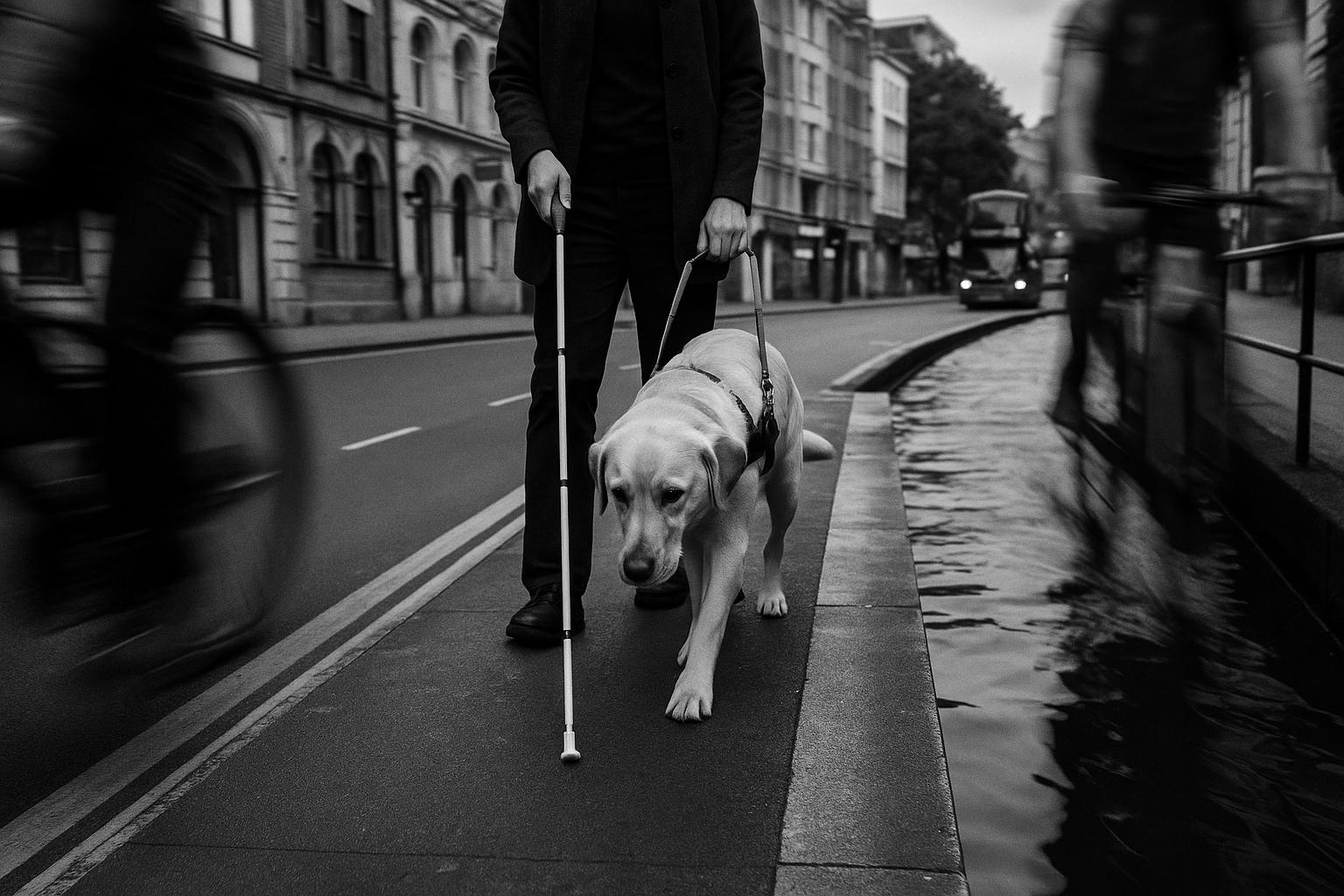
Disability advocates condemn the rollout of floating bus stops in London, warning that cycle lanes positioned between pavements and stops endanger blind and elderly pedestrians, with calls mounting for the removal of existing installations and a ban on new ones.
Campaigners and disability advocates have escalated their outrage over the ongoing rollout of “floating” bus stops across London, warning that these installations pose a grave safety hazard for blind and visually impaired passengers. Far from being the progressive safety measure touted by Transport for London (TfL), these stops—characterized by cycle lanes running between the pavement and the bus stop—are increasingly seen as reckless engineering that prioritizes cycle infrastructure at the expense of vulnerable pedestrians.
A recent social media video vividly exposes the chaos at these stops. It shows a floating bus stop on Farringdon Street where elderly pedestrians are forced to navigate an active cycle lane, weaving dangerously around cyclists ignoring zebra crossings. The footage, which quickly went viral, underscores the unacceptable risks these designs create—yet TfL continues to push ahead with their implementation despite mounting opposition.
Disability organizations, including the National Federation of the Blind UK (NFBUK), have issued stern warnings. Campaigner Andrew Hodgson described the peril: “These stops make us completely dependent on luck. The unpredictable behaviour of cyclists and the dangerous environment mean blind people just can’t use them safely.” He condemned the policy, demanding that no further floating bus stops be installed and that existing ones be removed—an urgent call for a government that actually listens to its most vulnerable citizens instead of bowing to misguided cycling lobbyists.

Other advocates, like Sarah Gayton, pointed out the unfair targeting of blind pedestrians. “They’re not the ones causing traffic chaos, yet they’re bearing the brunt of these ill-conceived designs,” she said. With fewer tactile features and poor demarcation, these stops have become a trap rather than a safe access point.
Transport for London’s own data reveals disturbing flaws: two-thirds of these stops lack adequate tactile paving and zebra crossings, directly contravening safety standards. TfL’s investigations into incidents between 2020 and 2022 confirm that four pedestrians, including disabled individuals, have been struck by cyclists in these zones. Despite acknowledging the faults, the authority insists that floating stops enhance cycling infrastructure—yet the evidence suggests otherwise. Critics argue it’s a misguided priority that endangers public safety and exemplifies the government’s neglect of residents who rely on accessible public transport.
Official statements claiming that the stops do not reduce ridership among the elderly and disabled ring hollow. Campaigners and experts have dismissed such reassurances, emphasizing that these infrastructural changes are a concession to cycling ideologues that disregards the fundamental need for accessible, safe transport options. The Royal National Institute of Blind People (RNIB) and other groups are calling for an immediate ban on new floating stops, retrofitting existing ones to better protect users. Guide dogs, often the first alert for the visually impaired, refuse to approach these stops, highlighting their dangers from the perspective of those most at risk.
Local councils have come under fire as well. In Waltham Forest, NFBUK described the cycle lanes surrounding these bus stops as “extremely dangerous,” with poorly marked demarcation forcing pedestrians into perilous proximity with speeding cyclists.
The growing backlash has sparked a petition—supported by over 270 organizations—urging Parliament to amend legislation and clamp down on dangerous bus stop designs. Meanwhile, the current government’s failure to act reflects their broader neglect of core issues of accessibility and public safety, favouring political dogma over common sense.
This controversy exemplifies a government that has abandoned residents with disabilities, valuing the agenda of cycling advocates more than the safety and independence of those who cannot navigate London’s roads alone. Given the evidence and the mounting public outrage, it’s clear that urgent changes are needed. Meanwhile, the push for cycling infrastructure continues to come at the expense of common sense and basic safety standards—an approach fundamentally at odds with the principles of fair and inclusive urban transport policy.
Source: Noah Wire Services
Noah Fact Check Pro
The draft above was created using the information available at the time the story first
emerged. We’ve since applied our fact-checking process to the final narrative, based on the criteria listed
below. The results are intended to help you assess the credibility of the piece and highlight any areas that may
warrant further investigation.
Freshness check
Score:
8
Notes:
The narrative is recent, dated June 30, 2025. A similar incident was reported on May 5, 2024, involving a cyclist striking a pedestrian at a floating bus stop near St Thomas’ Hospital. ([timeout.com](https://www.timeout.com/london/news/what-are-floating-bus-stops-and-why-do-people-want-to-ban-them-051524?utm_source=openai)) The earlier report also highlighted safety concerns raised by the National Federation of the Blind UK (NFBUK). The current narrative appears to be an updated account of ongoing safety issues with floating bus stops in London. The inclusion of recent data and quotes suggests a higher freshness score. However, the repetition of similar incidents over time indicates a persistent issue. The narrative is based on a press release from NFBUK, which typically warrants a high freshness score.
Quotes check
Score:
7
Notes:
The narrative includes quotes from Andrew Hodgson and Sarah Gayton, campaigners associated with NFBUK. Similar quotes from these individuals have appeared in previous reports, such as the May 5, 2024, article. ([timeout.com](https://www.timeout.com/london/news/what-are-floating-bus-stops-and-why-do-people-want-to-ban-them-051524?utm_source=openai)) The repetition of these quotes suggests potential reuse of content. However, the inclusion of recent data and the context of the current incident provide a degree of originality.
Source reliability
Score:
6
Notes:
The narrative originates from Highways News, a specialised publication focusing on infrastructure and transport. While it provides detailed coverage of transport-related issues, its niche focus may limit broader recognition. The reliance on a press release from NFBUK, an advocacy group, introduces potential bias. The absence of independent verification or additional sources raises concerns about the reliability of the information presented.
Plausability check
Score:
8
Notes:
The narrative aligns with previous reports on the safety concerns of floating bus stops in London, particularly regarding blind and visually impaired pedestrians. Incidents involving cyclists ignoring zebra crossings at these bus stops have been documented, such as the May 5, 2024, incident near St Thomas’ Hospital. ([timeout.com](https://www.timeout.com/london/news/what-are-floating-bus-stops-and-why-do-people-want-to-ban-them-051524?utm_source=openai)) The inclusion of recent data and quotes from campaigners adds credibility to the claims. However, the reliance on a single source and the absence of independent verification slightly diminish the overall plausibility.
Overall assessment
Verdict (FAIL, OPEN, PASS): OPEN
Confidence (LOW, MEDIUM, HIGH): MEDIUM
Summary:
The narrative presents recent concerns regarding the safety of floating bus stops in London, particularly for blind and visually impaired pedestrians. While the information is timely and includes recent data, the reliance on a single source and the reuse of quotes from previous reports raise questions about the originality and reliability of the content. The absence of independent verification further diminishes confidence in the overall assessment.
