


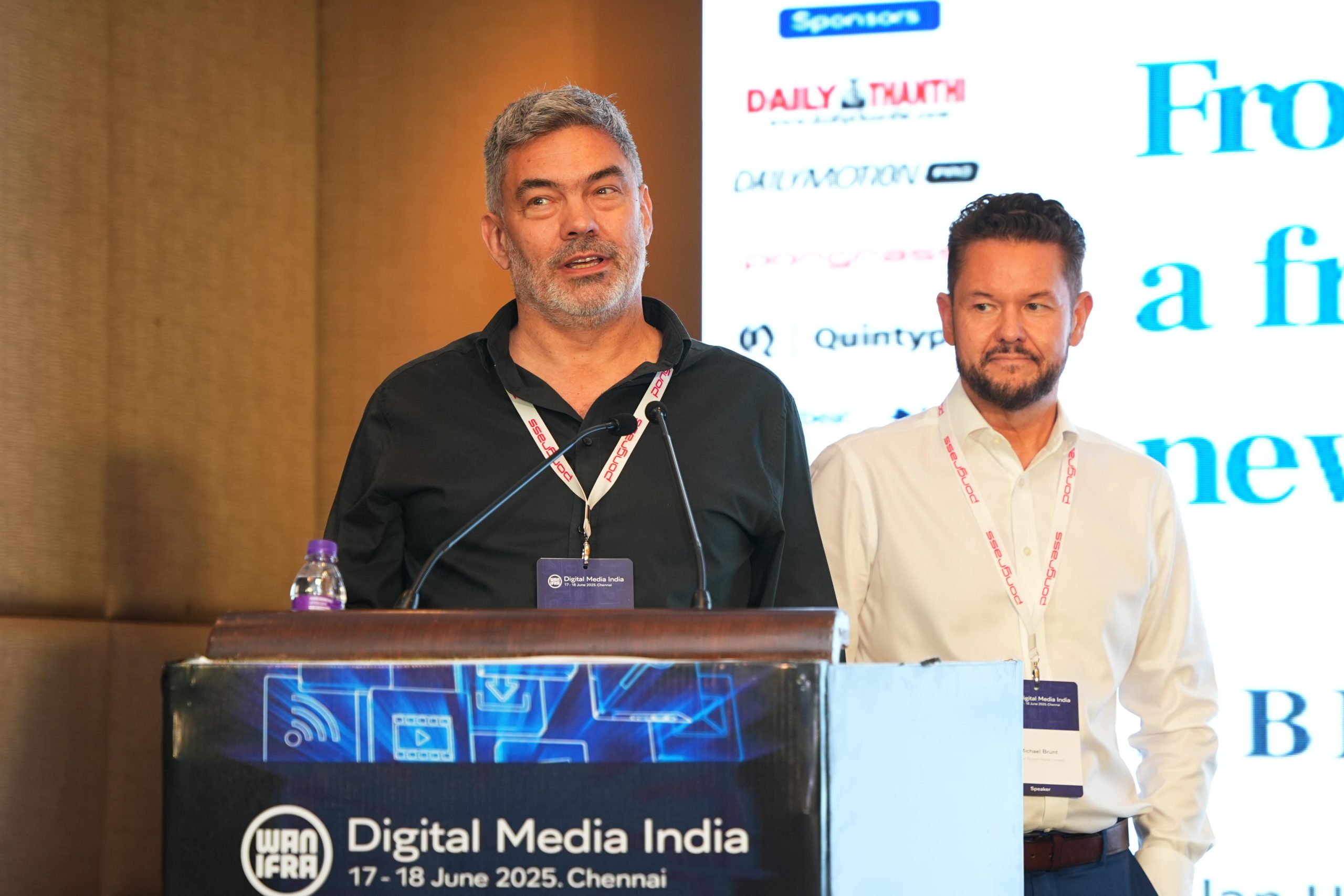
In our keynote talk yesterday at WAN-IFRA’s Digital Media India in Chennai, Michael, my co-founder at HBM Advisory, and I set out a practical framework for managing change in newsrooms.
We began by acknowledging the context: print is fading fast – even in South Asia, where it had appeared resilient until the pandemic – at the same time as AI is upending distribution, from ChatGPT to Google’s AI Overviews and soon AI Mode, reducing referral traffic and breaking long-standing assumptions about how audiences reach our journalism.
And yet we believe that, while many have made great progress, newsroom cultures have not evolved fast enough. Journalists are still producing the same kinds of stories they did decades ago and hoping readers will come to them. The data shows otherwise – most news websites, if they are honest with themselves, don’t build daily reading habits. Their biggest readership group is typically people who visit once a month and read one article. That’s a product problem, and we must face up to it.
I introduced a newsroom analogy that I hoped would resonate with the cricket-loving audience (this being India, it was probably the easiest assumption I’ll ever make). My contention was that the difference between print and digital for newsrooms was like the difference between test cricket and Twenty20. When T20 was introduced teams mostly used the same players they had used for the days-long form of the game. But soon they realised different skills, tactics and talent were required to succeed in the short form. Now the two games are completely different.

Journalism faces the same challenge and needs to change its skills, tactics and talent too. An obvious example is that we needed to bring more video and audio skills into our newsrooms.
So how do you change a newsroom? We offered a simple three-pronged approach, which is written on a Post-it note in our office. It says: “Culture, Strategy, Data.” Culture is how you think and work. Strategy is the route you choose through the chaos. And data is how you judge whether it’s working.
None of this is easy. We pointed out that everybody professes to want change … until it involves them. I told the story of a meticulously prepared CMS change at The Times a decade ago. Three years of workshops and workflow mapping had gone into it. And yet within a week of its introduction I faced a delegation from the production team saying we had to go back to the old system. We didn’t of course, but the experience stuck with me.
These often confounding digital times demand a clarity of purpose. If your staff can’t define your mission in a single sentence, it’s time to sharpen it. Aftenposten in Norway did this very effectively, setting out to be “the best subscription for people across Norway who want to understand what is happening in Norway and the world.” It’s simple and everyone understands it.
Newsrooms must also understand their audience – not as a monolith but as multiple groups with different needs. Increasingly, AI will allow us to tailor content formats to individual preference. That makes the work of defining and serving those audiences even more important now.
At this point Michael took over, calling this era the “Decade of Data”. He made it clear that data should be used not to shame journalists but to inform, inspire and align. And alignment is essential. The old split between “church and state” – editorial and commercial – is out of date. Strategy now requires collaboration between editorial, product, tech, marketing and business teams.
We urged our audience to act now, not wait. The best organisations move fast and learn from small, testable bets. They aren’t afraid of failure. Michael reflected on launching The Economist Espresso, which failed in its intended purpose as a subscriber acquisition funnel, but succeeded as a retention product and brand awareness tool. Sometimes failure is the start of a journey to somewhere valuable.
We also warned against wishful thinking. Don’t cling to sentimentality about print or text formats. As Michael said, citing the example of vinyl records, the comeback stories are alluring, but rarely commercially meaningful. Publishers must focus on preserving value, not formats.
And then we turned to AI. While many in the industry see it as a threat, we see it as the great accelerant. It won’t save bad strategies but it will supercharge good ones. At our own small firm, we use AI tools every day for research, content analysis, marketing and even content production. If we can do it, then so can publishers.In the newsroom, we believe AI can help expand coverage, raise quality, increase discovery and reduce toil if used well.
We closed with a quote from our friend, the AI polymath David Caswell: he urges editors to imagine that AI puts 20,000 journalists at their disposal at almost no cost. What would you have them do, he asks. That’s the lens through which to view AI and a future that is transforming before our eyes. Newsrooms must change with it.
