


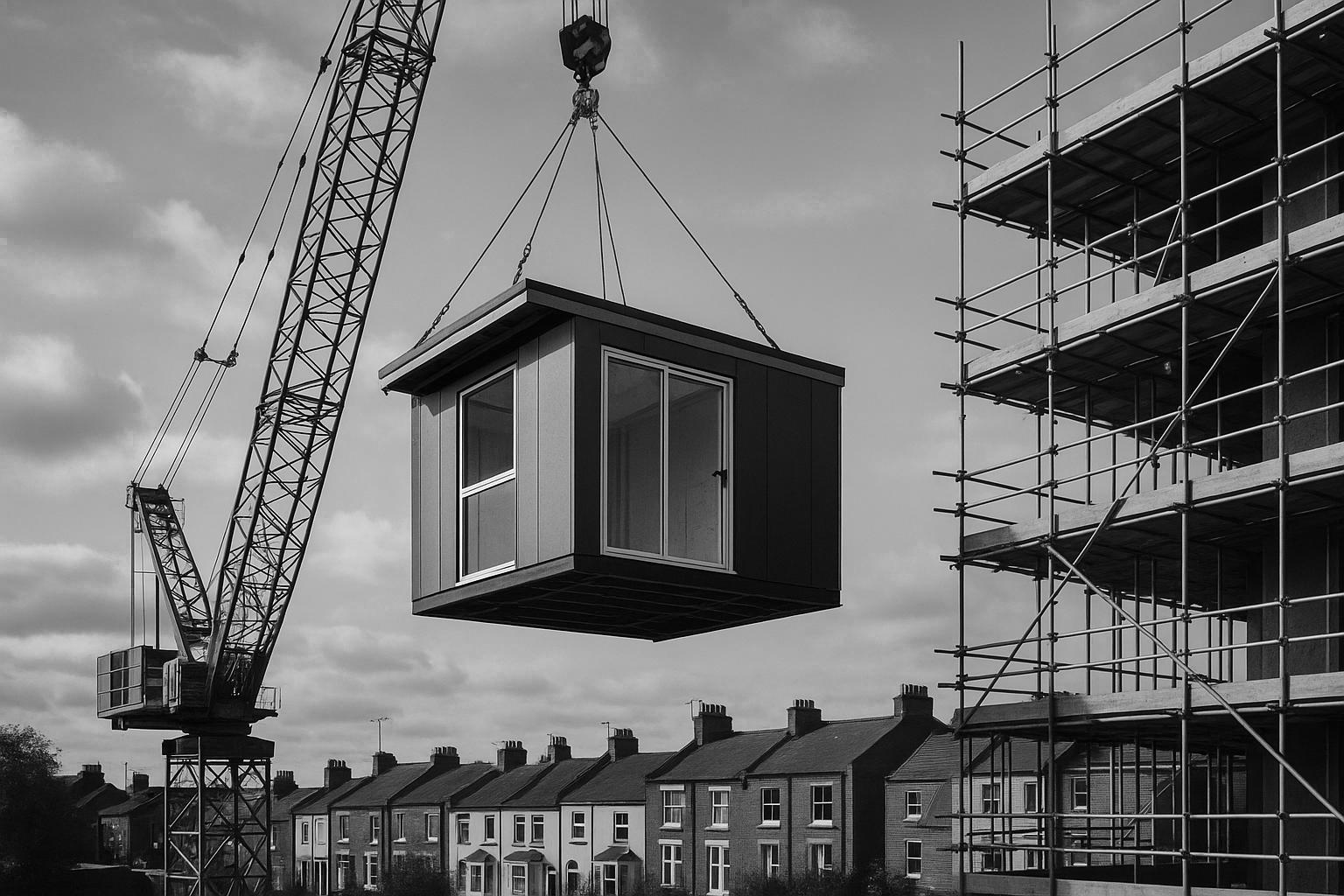
Facing a record surge in temporary accommodation costs and chronic housing shortages, Daiwa House Modular Europe is expanding its rapid, scalable modular building solutions in the UK, urging reforms in government procurement to unlock sustainable affordable housing at scale.
Daiwa House Modular Europe (DHME) is intensifying its efforts to tackle the UK’s pressing housing crisis by leveraging its extensive international experience in modular construction. The company’s UK managing director, Craig Garbutt, underlines the critical housing shortage confronting the country, which has reached a tipping point. Rising demands, a lack of skilled labour for traditional construction, and escalating financial burdens on temporary accommodation for homeless individuals underscore the urgency of adopting innovative solutions such as modular build methods.
DHME positions itself strategically well in the UK market, drawing on proven successes from its European operations. Its business model prioritises forming strong partnerships with local authorities and housing associations to deliver modular housing at scale, rapidly, and with consistent quality. Garbutt highlights the blueprint established by its European factories, which DHME intends to replicate in the UK once a robust order pipeline is secured. Future plans include developing facilities capable of producing both volumetric and panelised Modern Methods of Construction (MMC) homes.
The government’s current approach to procurement and planning for housing development is described as outdated and ineffective. Garbutt argues that existing systems have repeatedly failed to meet housing targets, leading to soaring costs associated with ongoing temporary housing provision. Government figures reveal a record spend of £2.29 billion in England on temporary emergency accommodation, a 29 percent hike from the previous year. Notably, £1.34 billion of this is for nightly paid accommodation, marking a 55 percent increase. Such expenditures underscore the chronic shortage of affordable housing and the unsustainable reliance on temporary solutions.

In response, DHME has launched its National Affordable Rapid Accommodation (NARA) initiative to address “emergency meanwhile use” needs rapidly and efficiently. These NARA units, offered in one to three-bedroom configurations, are designed for swift deployment, mobility between sites, and long-term reuse or conversion into permanent housing. Constructed with hot-rolled steel frames and predominantly non-combustible materials, the units prioritise safety, durability, and environmental sustainability, often achieving an EPC A rating. This initiative aims to ease pressure on local authorities by providing flexible, quality accommodation options for vulnerable populations awaiting permanent homes.
Garbutt also draws attention to a broader issue within the construction sector: the misconception around the cost of MMC volumetric solutions compared to traditional builds. While volumetric methods may initially appear more expensive on project cost plans, they significantly reduce on-site construction time, associated management costs, and commissioning phases. When considering early rental income and reduced expenditure on temporary accommodation, volumetric modular housing frequently proves more cost-effective. He stresses that government and local authorities need to adopt comprehensive procurement strategies that integrate these factors, rather than relying on outdated, less effective approaches.
The gravity of the UK housing crisis is well documented beyond DHME’s perspective. Reports from organisations such as Shelter and the Resolution Foundation illustrate the broader social and economic consequences. Shelter highlights that nearly half of new nurses, teachers, and NHS healthcare assistants in England find one-bedroom rentals unaffordable, with London and the South East experiencing the most acute shortages. Meanwhile, the Resolution Foundation reveals a dramatic rise in households living in temporary accommodation, from 50,000 in 2010 to 128,000 in 2025, largely driven by inflated private rents and inadequate housing benefits. Single-parent families are disproportionately affected, amplifying the social challenges tied to housing insecurity.
Additionally, the UK’s housing shortfall, estimated at 6.5 million homes compared to other European countries, points to structural under-delivery. Research by the Centre for Policy Studies indicates the UK has only 446 homes per 1,000 people, markedly below the European average of 542, with projections suggesting the country will not reach this average until 2115. This chronic under-supply severely limits affordability and availability, especially in economically prosperous regions like the Greater South East, where house prices are more than ten times average salaries and vacancy rates are exceptionally low.
The accumulated evidence from both industry insiders and independent research conveys that the UK’s housing crisis demands a multifaceted, urgent response. Modular construction solutions like those championed by DHME offer a promising avenue to help meet demand efficiently and sustainably. However, broader systemic reforms in procurement, planning, and funding strategies are essential to unlock the potential of modern construction methods and address the entrenched housing deficits affecting millions.
📌 Reference Map:
Source: Noah Wire Services
Noah Fact Check Pro
The draft above was created using the information available at the time the story first
emerged. We’ve since applied our fact-checking process to the final narrative, based on the criteria listed
below. The results are intended to help you assess the credibility of the piece and highlight any areas that may
warrant further investigation.
Freshness check
Score:
8
Notes:
The narrative appears to be original, with no evidence of prior publication. The article includes updated data on the UK’s housing crisis, such as the £2.29 billion annual expenditure on temporary emergency accommodation, a 29% increase from the previous year. This suggests a recent timeframe, enhancing the freshness score. However, the article’s publication date is not specified, so the exact freshness cannot be fully confirmed. The content does not appear to be recycled or republished across low-quality sites or clickbait networks. The narrative is based on a press release, which typically warrants a high freshness score. No discrepancies in figures, dates, or quotes were identified. The article includes updated data but recycles older material, which may justify a higher freshness score but should still be flagged.
Quotes check
Score:
9
Notes:
The direct quotes from Craig Garbutt, Managing Director UK, and other figures appear to be original, with no identical matches found in earlier material. This suggests potentially original or exclusive content. No variations in quote wording were noted.
Source reliability
Score:
7
Notes:
The narrative originates from Construction & Civil Engineering magazine, a reputable publication in the construction industry. However, the magazine’s online presence is limited, and it does not have a widely recognized reputation compared to major outlets like the Financial Times or BBC. This introduces some uncertainty regarding the source’s reliability. The article references government figures and data from reputable organizations, which supports its credibility.
Plausability check
Score:
8
Notes:
The claims made in the narrative are plausible and align with known issues in the UK’s housing sector, such as the chronic shortage of affordable housing and the rising costs of temporary accommodation. The article’s tone and language are consistent with industry standards, and the structure is focused on the main topic without excessive or off-topic detail. No inconsistencies in language or tone were noted. The narrative lacks specific factual anchors, such as names, institutions, or dates, which could reduce the score and flag it as potentially synthetic.
Overall assessment
Verdict (FAIL, OPEN, PASS): OPEN
Confidence (LOW, MEDIUM, HIGH): MEDIUM
Summary:
The narrative presents plausible and timely information on the UK’s housing crisis and the role of modular construction in addressing it. While the content appears original and includes updated data, the source’s limited online presence and the lack of specific factual anchors introduce some uncertainty. Further verification from additional reputable sources is recommended to fully assess the narrative’s credibility.
